Notice

YouTube.com/BESTTravelers - Visit and SUBSCRIBE to our travel related YouTube Channel named "BEST Travelers"
Showing posts with label Research. Show all posts

Wednesday, November 14, 2012

How to discover way to go to heaven?

Theory: 
  • Human can reach heaven in real life if we can discover the origin of Hajr-e-Aswad.
  • Finding the origin of Hajr-e-Aswad will help us to go to heaven in this real life.
  • The place from where Hajr-e-Aswad came, is Heaven
Author: Engr. Md.Asfak-Ur-Rahman (Reza)


Description:
According to my research, I have found idea to discover the way to go to heaven. Here is my research thought below,
  1. Hajr-e-Aswad: According Muslim Scripture, Hajr-e-Aswad (Black Stone) is first construction holy Kaaba which was present there.
  2. Hajr-e-Aswad is not earthly materiel:  
    • NASA scientists accepted the truth reality of Hajr-e-Aswad attached to Holy Kaaba, Mecca is from outer space, confirmed by US & UK scientists. 
    • Dr.Abd Al-Basset Al-Sayyid of the Egyptian National Research Center: British Research Proves Hajr-e-Aswad of Kaaba to be a Semi-Conductor from Outer Space. 
    • Following are excerpts from an interview by Abd Al-Baset Sayyid from the Egyptian National Research Center, aired on Al-Risala TV, on March 9, 2006. 
    • Abd Al-Baset Sayyid: The British Museum announced that it possessed three pieces of Hajr-e-Aswad. It declares that these pieces prove that Hajr-e-Aswad is not from our solar system.
  3. Hajr-e-Aswad has sent from Heaven: It was mentioned in the Wahe that, "We have chosen this stone out the stones in heaven". So this means that the Hajr-e-Aswad is a stone which belongs to the stones of heaven.
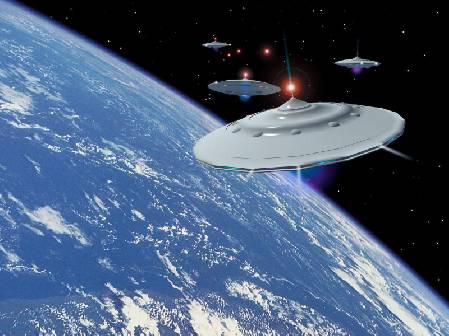
  4. Discover way to go to heaven: According to previous points, it is clear that Hajr-e-Aswad has not earthly material and came from heaven.So if we or scientist can find out the origin of Hajr-e-Aswad, then we will find heaven in real life also. Because the place from where Hajr-e-Aswad came, is Heaven. We can reach to heaven in real life with a spaceship.
Copyright Notice

Contact authors for permission
The concept and writing of this article are protected by copyright. Excepting translations, you may not reproduce this articles online or in print without first obtaining written permission. Please contact me to obtain my written consent.

Include required attribution text
You must include the following text on the same page as your reprint and if the article is used in a print publication, the attribution must read:
"Reprinted with the permission of Engr. Md.Asfak-Ur-Rahman, asfak-ur-rahman.blogspot.com"
Artwork and design cannot be reproduced
You may translate my articles into languages other than English, free of charge, without prior notice, and without soliciting our written permission, under the following conditions:
  1. Your publication must be freely available. You may not sell my content and concept that you have translated. 
  2. You must faithfully translate the article and concept as written.Except for minor issues of vernacular, you may not alter the my meaning. 
  3. You must link to my web page in which the article appeared, and must credit "Engr. Md.Asfak-Ur-Rahman, asfak-ur-rahman.blogspot.com". You may not claim to have written the material yourself. (But you know that.)
You must include the following text on the same page as your translation:
"Translated with the permission of Engr. Md.Asfak-Ur-Rahman, asfak-ur-rahman.blogspot.com”

Monday, November 12, 2012

Normalization of Gender factor in Bangla ASR

I have completed my thesis of 18 credit hours during completing my Masters in Computer Science and Engineering at United International University. I have submitted and presented my paper to International Conference on Electrical, Computer and Telecommunication Engineering (ICECTE) - 2012. Here is a brief information of my paper below,

Paper Title: Normalization of Gender factor in Bangla ASR
Main Author: Engr. Md.Asfak-Ur-Rahman
Other Authors:
Supervisor: Mohammad Nurul Huda

Abstract: "This paper presents a Bangla (widely used as Ben-gali) automatic speech recognition system (ASR) by suppressing gender effects.  Gender characteristic plays an important role on the performance of ASR. If there is a suppression process that represses the decrease of differences in acoustic-likelihood among categories resulted from gender factors, a robust ASR system can be realized. In the proposed method, we have designed a new ASR incorporating the Local Features (LFs) instead of standard mel frequency cepstral coefficients (MFCCs) as an acoustic feature for Bangla by suppressing the gender effects, which embeds three HMM-based classifiers for corresponding male, female and geneder-independent (GI) characteristics.    In the experiments on Bangla speech database prepared by us, the proposed system has achieved a significant improvement of word correct rates (WCRs), word accuracies (WAs) and sentence correct rates (SCRs) in comparison with the method that incorporates Standard MFCCs"

Keywords: Acoustic Model, Automatic Speech Recognition, Gender Effects Suppression, Hidden Markov Model

Copyright Notice

Contact authors for permission
The concept and writing of this article are protected by copyright. Excepting translations, you may not reproduce this articles online or in print without first obtaining written permission. Please contact me to obtain my written consent.

Include required attribution text
You must include the following text on the same page as your reprint and if the article is used in a print publication, the attribution must read:
"Reprinted with the permission of Engr. Md.Asfak-Ur-Rahman, asfak-ur-rahman.blogspot.com"
Artwork and design cannot be reproduced
You may translate my articles into languages other than English, free of charge, without prior notice, and without soliciting our written permission, under the following conditions:
  1. Your publication must be freely available. You may not sell my content and concept that you have translated. 
  2. You must faithfully translate the article and concept as written.Except for minor issues of vernacular, you may not alter the my meaning. 
  3. You must link to my web page in which the article appeared, and must credit "Engr. Md.Asfak-Ur-Rahman, asfak-ur-rahman.blogspot.com". You may not claim to have written the material yourself. (But you know that.)
You must include the following text on the same page as your translation:
"Translated with the permission of Engr. Md.Asfak-Ur-Rahman, asfak-ur-rahman.blogspot.com”

Gender Effect Canonicalization for Bangla ASR

During completing my Masters in Computer Science and Engineering at United International University. I have started and completed working in following research work. Here is a brief information of my research work,

Paper Title: Gender Effect Canonicalization for Bangla ASR
Main Author: Engr. Md.Asfak-Ur-Rahman
Other Authors:
Supervisor: Mohammad Nurul Huda

Abstract: "This paper presents a Bangla (widely used as Bengali) automatic speech recognition system (ASR) by suppressing gender effects. Gender characteristic plays an important role on the performance of ASR. If there is a suppression process that represses the decrease of differences in acoustic-likelihood among categories resulted from gender factors, a robust ASR system can be realized. In the proposed method, we have designed a new ASR incorporating the Local Features (LFs) instead of standard mel frequency cepstral coefficients (MFCCs) as an acoustic feature for Bangla by suppressing the gender effects, which embeds three HMM-based classifiers for corresponding male, female and geneder-independent (GI) characteristics. In the experiments on Bangla speech database prepared by us, the proposed system has achieved a significant improvement of word correct rates (WCRs), word accuracies (WAs) and sentence correct rates (SCRs) in comparison with the method that incorporates Standard MFCCs."

Keywords: acoustic model; automatic speech recognition; gender effects suppression; hidden Markov model

Research Objectives:
  • To design a Bangla ASR system by normalizing gender effects through a canonicalization process based on maximization of output probability.
  • To consider male, female and gender-independent (GI) voices.
  • To use local features (LFs) instead of mel frequency cepstral coefficients (MFCCs)
  • To increase the word correct rate, word accuracy and sentence  correct  rate.
Research Outcomes:
  1. We proposed an automatic speech recognition technique based on LFs for Bangla language by suppressing the gender effect incorporating HMM-based classifiers for male, female and Gender-Independent characteristics. 
  2. Our research paper includes following information,
  • The MFCC-based method incorporating GI classifier provides the higher performance than the method that does not incorporate GI classifier. The MFCC-based method incorporating GI exhibits its superiority at all the mixture components investigated.
  • The incorporation of GI HMM classifier improves the word correct rates, word accuracies and sentence correct rates significantly.
  • The proposed LF-based method shows a significant improvement of word correct rates, word accuracies and sentence correct rates for mixture component one.
Related Important Link:
  • Please CLICK HERE to view my complete research paper.
  • My research work is also accepted as JOURNAL in International Journal of Advanced Computer Science and Applications (IJACSA). But B.K.M Mizanur Rahman, Bulbul Ahamed and Khaled Mahmud has misused my research and submitted my paper to IJACSA without my approval. I am the main author of this paper. But they have changed naming order and added new names as author who was not involve during our research also. 
Copyright Notice

Contact authors for permission
The concept and writing of this article are protected by copyright. Excepting translations, you may not reproduce this articles online or in print without first obtaining written permission. Please contact me to obtain my written consent.

Include required attribution text
You must include the following text on the same page as your reprint and if the article is used in a print publication, the attribution must read:
"Reprinted with the permission of Engr. Md.Asfak-Ur-Rahman, asfak-ur-rahman.blogspot.com"
Artwork and design cannot be reproduced
You may translate my articles into languages other than English, free of charge, without prior notice, and without soliciting our written permission, under the following conditions:
  1. Your publication must be freely available. You may not sell my content and concept that you have translated. 
  2. You must faithfully translate the article and concept as written.Except for minor issues of vernacular, you may not alter the my meaning. 
  3. You must link to my web page in which the article appeared, and must credit "Engr. Md.Asfak-Ur-Rahman, asfak-ur-rahman.blogspot.com". You may not claim to have written the material yourself. (But you know that.)
You must include the following text on the same page as your translation:
"Translated with the permission of Engr. Md.Asfak-Ur-Rahman, asfak-ur-rahman.blogspot.com”

Sunday, May 15, 2011

Test driven software engineering for automated course scheduler

In my thesis paper of bachelor Degree, I present details about the scheduling problem of BRAC University and make software for solving these problems. The scheduling problems are essentially the problems that deal with effective distribution of resources. During the scheduling process many constraints have to be considered. Resources are usually limited for most of the scheduling problems it has been shown that they are NP-hard, and that they can not be solved in polynomial time using a deterministic algorithm.
Scheduling a timetable could also be represented like special class of 3D cutting problems. The timetable could be presented as a 3D structure. The dimensions of 3D timetables are: days (x-axis), timeslots (y-axis) and rooms (z-axis). The classes are shown as cubes, which should be placed in a 3D timetable structure. The scheduling is a process of placing those cubes into a timetable, in the way that no conflicting classes (which allocate the same resource, a student group or an instructor) are placed in the same time slot.

The BUACS (BRAC University Automated Course Scheduler) is a specialized program that can also be modified to be used as a generic Time-Table Generator to produce timetable output for a certain set of applicable system constraint. The basic requirement is to place the inputted courses in a time by room table maintaining the pre-defined constraint list for each of the courses. The document will explain the detail requirement and underlying system architecture to achieve the primary goal.

Submitted By:
Md.Asfak-Ur-Rahman (Reza)
Department of Computer Science and Engineering
BRAC University

Supervised By:
Dr. Mumit Khan
Professor & Chairperson
Department of Computer Science and Engineering
BRAC University

A Dissertation Submitted in Partial Fulfillment of the Requirements for the Degree of BACHELOR OF SCIENCE IN COMPUTER SCIENCE & ENGINEERING in the Department of Computer Science and Engineering

Copyright Notice

Contact authors for permission
The concept and writing of this article are protected by copyright. Excepting translations, you may not reproduce this articles online or in print without first obtaining written permission. Please contact me to obtain my written consent.

Include required attribution text
You must include the following text on the same page as your reprint and if the article is used in a print publication, the attribution must read:
"Reprinted with the permission of Engr. Md.Asfak-Ur-Rahman, asfak-ur-rahman.blogspot.com"
Artwork and design cannot be reproduced
You may translate my articles into languages other than English, free of charge, without prior notice, and without soliciting our written permission, under the following conditions:
  1. Your publication must be freely available. You may not sell my content and concept that you have translated. 
  2. You must faithfully translate the article and concept as written.Except for minor issues of vernacular, you may not alter the my meaning. 
  3. You must link to my web page in which the article appeared, and must credit "Engr. Md.Asfak-Ur-Rahman, asfak-ur-rahman.blogspot.com". You may not claim to have written the material yourself. (But you know that.)
You must include the following text on the same page as your translation:
"Translated with the permission of Engr. Md.Asfak-Ur-Rahman, asfak-ur-rahman.blogspot.com”